When Social Media Becomes an Escape
When was the last time you checked how much time you spent on social media apps?
At the point of writing, I'm ashamed to say that I had spent close to seven hours last week! Across Twitter/X and Instagram.
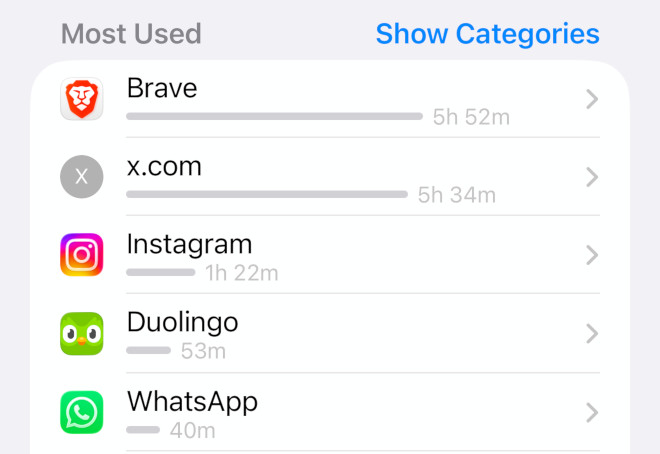
And that's on my phone. On the tablet, I clocked another two hours on it. 🤦
In my defence, I'm trying to grow my social media presence. So it's inevitable that I have to spend more time on the platform.
But if I'm being honest, I would have been able to achieve my objectives in less than half the time. Way less.
And I can't justify my usage of Instagram - I'm not even actively promoting myself on that platform. Yet.
Seven. Freaking. Hours.
I could have watched The Odyssey twice over in that time!
Again, I could tell myself that I needed all that time to grow on the platform.
And, in all honesty, it would be an excuse.
I realised it was becoming a problem when I noticed myself reaching for my phone several times in an hour. Instead of thinking of the solution to the problem I'm working on, I would find myself scrolling Twitter/X.
That is not a good thing in and of itself - spending time unproductively. It gets worse when it steals my time away from other activities such as paying my bills.
Although, if it were just this problem, I would not be so concerned.
Multiple research studies have shown that social media are affecting our cognition ability i.e. our ability to think. The common offenders: TikTok, YouTube Shorts, Instagram Reels. The effects apply to a whole range of activities related to the brain: attention span, mental health, problem solving, sleep hygiene.
It might come as a shock (or not): researchers see similar symptoms between compulsive use of social media and drug addictions. And, like any addictions, that can lead to undesirable behaviour changes.
As an adult, I have difficulty controlling my social media usage. What hope is there for young children?
To be clear, there is definitely value in social media:
- many learning concepts are visualised in an interesting way for easy comprehension
- clear way to demonstrate expertise, passion and experience in a particular subject
The problem is that it is also highly addictive.
This is a problem that I hope to address before my kids become hopelessly addicted.
Like I mentioned, I'm of the view that there is value in digital devices and social media. The goal that I'm trying to achieve is to realise said value without getting (overly) addicted.
Here are some of the things that I'm exploring:
- tools to manage app usage and screen time (there are built-in options to do this already)
- alternate devices to remain digitally connected without the lure of social media
- in-person games to be an alternative to digital entertainment for wholesome fun
- blended learning to ground children in reality while acquiring digital skills.
I'll be going into details of each of my approaches in future posts.
For a start, I'll be evaluating the viability of an e-ink display phone as a daily driver for a smartphone. I've got a whole list of criteria to evaluate. One of them is whether it works for a teenager.
The key phrase is "for a teenager".
We can avoid the problem by avoiding social media completely. Just use a feature phone (aka a "dumb" phone). But that would cut them off from their friends on instant messaging apps.
And we can't do that. This would be a "solution worse than the problem" situation - making them anti-social in an attempt to stop social media addiction.
The replacement device has to be functional. I have high hopes that e-ink display phones can meet those criteria.
I will share more after I've completed the evaluation.
References
Research studies on the effects of short form videos on cognition:
- Nguyen, L., Walters, J., Paul, S., Ijurco, S., Rainey, G., Parekh, N., Blair, G., & Darrah, M. (2025). Feeds, feelings, and focus: A systematic review and meta-analysis examining the cognitive and mental health correlates of short-form video use.. Psychological bulletin, 151 9, 1125-1146.
- Das, I., Thomas, A., & Shrestha, P. (2025). Impact of Digital Engagement on Mental Health and Neuroplastic Changes in Adults. SXC Journal.
- De Barros, E. (2024). Understanding the influence of digital technology on human cognitive functions: A narrative review. IBRO Neuroscience Reports, 17, 415 - 422.
- Nakhla, M. (2025). Doomscrolling and Digital Brain Rot: The Psychological Impact of Short-Form Media on Egyptian Youth. Journal of Posthumanism
- Kim, I. (2024). EXPLORING THE COGNITIVE AND SOCIAL EFFECTS OF TIKTOK ON ADOLESCENT MINDS: A STUDY OF SHORT-FORM VIDEO CONSUMPTION. International Education and Research Journal.
- Arouch, S., Edgcumbe, D., Pezaro, S., & Silva, K. da. (2025). The Impact of Short-Form Video Use on Cognitive and Mental Health Outcomes: A Systematic Review (p. 2025.08.27.25334540). medRxiv.
- Alruwaili, R. (2025). Scroll immersion and short-form video use: Predictors of attention, memory, and fatigue among Saudi social media users.. Acta psychologica, 260, 105674.
- Mahmoudi, M., Taghiyareh, F., & Arian, K. (2024). Effect of Short-Form Videos on Student Attention. 2024 11th International Symposium on Telecommunications (IST), 774-779.
- Barton, N., & Smyth, M. (2025). Context-switching in short-form videos: What is the impact on prospective memory?. Memory, 33, 788 - 801.
- Chanddru, V. (2025). The Impact of Mobile Applications on Neuroplasticity and Learning Outcomes in Youth: A Technical Analysis. European Journal of Computer Science and Information Technology.
- Drigas, A., & Sideraki, A. (2024). Brain Neuroplasticity Leveraging Virtual Reality and Brain–Computer Interface Technologies. Sensors (Basel, Switzerland), 24.
- Yan, T., Su, C., Xue, W., Hu, Y., & Zhou, H. (2024). Mobile phone short video use negatively impacts attention functions: an EEG study. Frontiers in Human Neuroscience, 18.
- Xie, J., Xu, X., Zhang, Y., Tan, Y., Wu, D., Shi, M., & Huang, H. (2023). The effect of short-form video addiction on undergraduates’ academic procrastination: a moderated mediation model. Frontiers in Psychology, 14.
- Ye, J., Wu, Y., Wu, Y., Chen, M., & Ye, J. (2022). Effects of Short Video Addiction on the Motivation and Well-Being of Chinese Vocational College Students. Frontiers in Public Health, 10.
- Zhang, C., & Zhu, B. (2025). Digital gratification: short video consumption and mental health in rural China. Frontiers in Public Health, 13.
- Lin, B., Chung, Y., Cheng, H., Yen, Y., Li, C., & Cherng, F. (2024). Understanding the Effects of Short-Form Videos on Sustained Attention. Extended Abstracts of the CHI Conference on Human Factors in Computing Systems.
- Alfatih, M., Nashwandra, N., Nugraha, N., Banyubasa, A., Simangunsong, G., Barus, I., & Fami, A. (2024). THE INFLUENCE OF TIKTOK SHORT-FORM VIDEOS ON ATTENTION SPAN AND STUDY HABITS OF STUDENTS IN COLLEGE OF VOCATIONAL STUDIES IPB UNIVERSITY. EDUTECH.
Research studies on the effects of digital device and social media addiction:
- Méndez, M., Padrón, I., Fumero, A., Marrero, R., Méndez, L., , M., González, I., Josefa, R., & , I. (2024). Effects of internet and smartphone addiction on cognitive control in adolescents and young adults: A systematic review of fMRI studies. Neuroscience & Biobehavioral Reviews, 159
- Áfra, E., Janszky, J., Perlaki, G., Orsi, G., Nagy, S., Árato, Á., Szente, A., Alhour, H., Kis-Jakab, G., & Darnai, G. (2023). Altered functional brain networks in problematic smartphone and social media use: resting-state fMRI study. Brain Imaging and Behavior, 18, 292 - 301.
- Anbumalar, C., & Sahayam, B. (2024). Brain and Smartphone Addiction: A Systematic Review. Human Behavior and Emerging Technologies.
- Wadsley, M., & Ihssen, N. (2023). A Systematic Review of Structural and Functional MRI Studies Investigating Social Networking Site Use. Brain Sciences, 13.
- He, Q., Turel, O., & Bechara, A. (2017). Brain anatomy alterations associated with Social Networking Site (SNS) addiction. Scientific Reports, 7.
- Yuste, R., Baler, R., & Volkow, N. (2025). Addictive-like Dimensions of Problematic Use of Social Media.. Journal of addiction medicine.
- De, D., Jamal, M., Aydemir, E., & Khera, A. (2025). Social Media Algorithms and Teen Addiction: Neurophysiological Impact and Ethical Considerations. Cureus, 17.
- Wacks, Y., & Weinstein, A. (2021). Excessive Smartphone Use Is Associated With Health Problems in Adolescents and Young Adults. Frontiers in Psychiatry, 12.
- Pera, A. (2020). The Psychology of Addictive Smartphone Behavior in Young Adults: Problematic Use, Social Anxiety, and Depressive Stress. Frontiers in Psychiatry, 11.
- Wyatt, Z. (2025). Wired for Want: How Dopamine Drives the New Epidemic of Everyday Addictions. Psychiatry and Behavioral Health.
- Kumari, D. (2025). Mobile Addiction Among Teenager: Modern Impacts and Their Solutions. International Scientific Journal of Engineering and Management.
Research studies on how behaviour can be shaped by our actions:
- Arthur, S. (1971). Operant Conditioning. Australian and New Zealand Journal of Psychiatry, 5, 1 - 2.
- Schlinger, H. (2021). The impact of B. F. Skinner’s science of operant learning on early childhood research, theory, treatment, and care. Early Child Development and Care, 191, 1089 - 1106.
- Peterson, G. (2004). A day of great illumination: B. F. Skinner's discovery of shaping.. Journal of the experimental analysis of behavior, 82 3, 317-28.
- Hu, J. (2024). Operant Conditioning in Child Psychology: Understanding the Influence of Rewards and Punishments on Childrens Behavior. Lecture Notes in Education Psychology and Public Media.
(Majority of research extracted from show notes of Diary Of A CEO: Brain Rot Emergency: These Internal Documents Prove They’re Controlling You!)